
Need to make a large, guaranteed payment? A cashier’s check could be exactly what you need. In fact, it’s often the go-to choice when someone wants guaranteed funds, such as purchasing a car or maybe sending a large amount to someone who requires assurance.
Simply put, a cashier’s check is a check that the bank issues using its own money. Meaning, once the bank issues it, the payment is sure to reach, making it far more secure in comparison to a personal check.
Seems like a lot? In the following guide, we will give you a clear breakdown, starting from what a cashier’s check is to how it works, and the steps to use it safely, so you can handle the big payments without any worry.
Read on to know more!
Using a cashier’s check is a reliable method for ensuring that your payment is secure and guaranteed.
What Is a Cashier’s Check?
A cashier’s check is a check issued and guaranteed by a bank, using the bank’s own funds.
This means that you pay the bank, and then they issue the check, making it a guaranteed funds check rather than a standard personal check—no wonder the cashier’s check is closely associated with trust and security.
And people usually use them for large or important payments (home down payments, car purchases, large transactions, rent deposits). For example, let’s say you are planning to purchase a used car for around $8000.
However, the seller doesn’t want a personal check as it may bounce. Therefore, you go to the bank, pay them the amount, and they give you a cashier’s check of that amount. As a result, the seller accepts it as the money will be directly drawn from the bank’s funds, assuring them it is completely genuine and available.
How Does a Cashier’s Check Work?
Well, it’s much simpler than it sounds. That is, whenever you request a cashier’s check, here’s a typical cashier’s check process:
- Firstly, you provide the funds to the bank upfront. It can be anything, ranging from your checking account to savings, cash, and so on.
- Secondly, the bank issues the check from its own funds. They become the guarantor, which is why the cashier’s checks are considered safe.
- Lastly, you give the check to the recipient. As the bank automatically backs it, they are convinced that the funds are authentic.
However, one of the biggest benefits is certainly the cashier’s check clearing time. Unlike a personal one that might take several days to clear, their verification is much faster, ultimately giving both parties peace of mind that the funds are guaranteed, no matter what.
When Should You Use a Cashier’s Check?
Sometimes, using a regular personal check isn’t enough, especially when large transactions are involved. This is where a cashier’s check comes in!
So, if you are thinking “when to use cashier’s check,” the short answer is anytime you require a safe and guaranteed payment.
One of the most common scenarios is a home purchase. That is, when making a down payment or paying the closing expense, the lenders and sellers often need a cashier’s check for house purchase as it makes sure the funds are verified and readily available. This also avoids any risk of a personal check bouncing or causing delays.
Some other situations where they can be useful are as follows:
- Purchasing a car: Be it a new or used one, this check gives the seller confidence that the payment is real.
- Large personal transactions: They ensure the money is guaranteed whenever you need to pay someone a large sum you don’t know well.
- Rent or security deposits: Landlords often ask for these checks to avoid any sort of delays or issues with insufficient funds.
How to Get a Cashier’s Check
Ready to make a large payment? But where to get a cashier’s check?
Generally, most of the banks and credit unions can issue one quickly, along some even let you handle it online for more convenience.
This is how it works:
- Visit the bank/credit union: Bring the money for the check, either in cash or from your account. Afterwards, the bank will issue the check from its own funds, making it a guaranteed funds check.
- Ask about the cashier’s check fee: Most banks tend to charge a small fee to issue the check. The expense varies, depending on the bank and the account type, so it’s worth checking ahead of time to avoid unwanted surprises.
- Get a cashier’s check online: Most banks now let you request a check without having to visit a branch. The bank can then mail it to you or even send it directly to the recipient, which is quite handy if you are short on time or cannot visit the branch in person.
How to Fill Out a Cashier’s Check
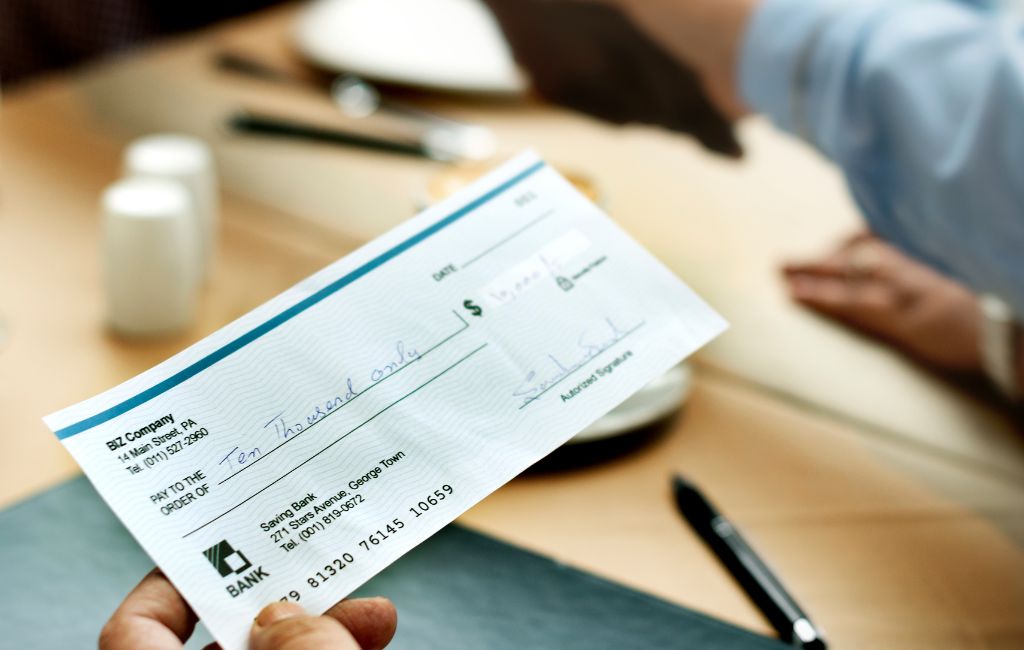
Filling out a cashier’s check is simpler, but you must know the right way to ensure the payment is all good to go. So, if you are in a constant wonder of how to fill out a cashier’s check, here’s how:
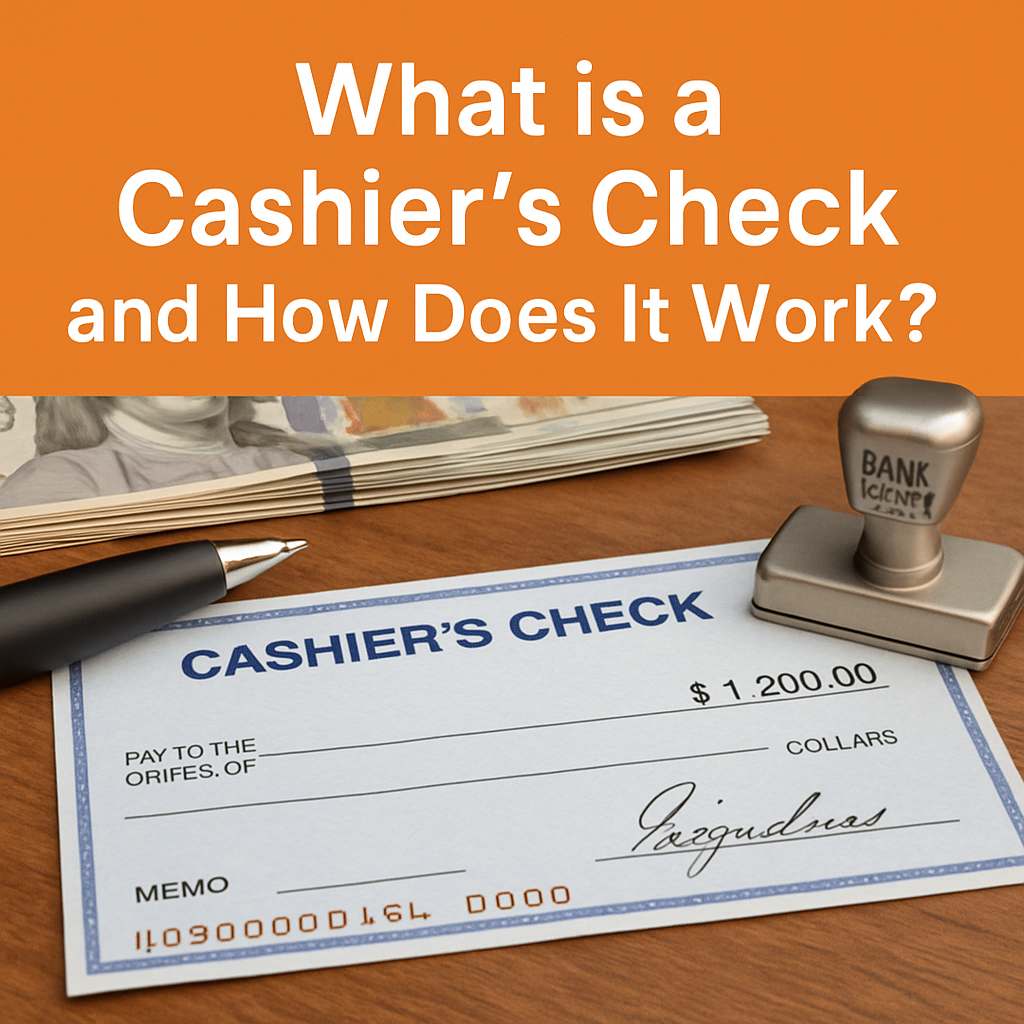
- Payee information: Write the person or the business name receiving the check correctly, as this is the one the bank will pay.
- Amount: Next, write the payment amount in numbers in the designated box, and then write it out in words on the given line. This will work as a double verification, avoiding mistakes.
- Memo (Optional): Some checks have a memo line where you can note down what the payment is for, such as “Car purchase”
- Signature: Most cashier’s checks are already signed by the bank, so you don’t require to sign it yourself. Hence, make sure all the other fields are correct.
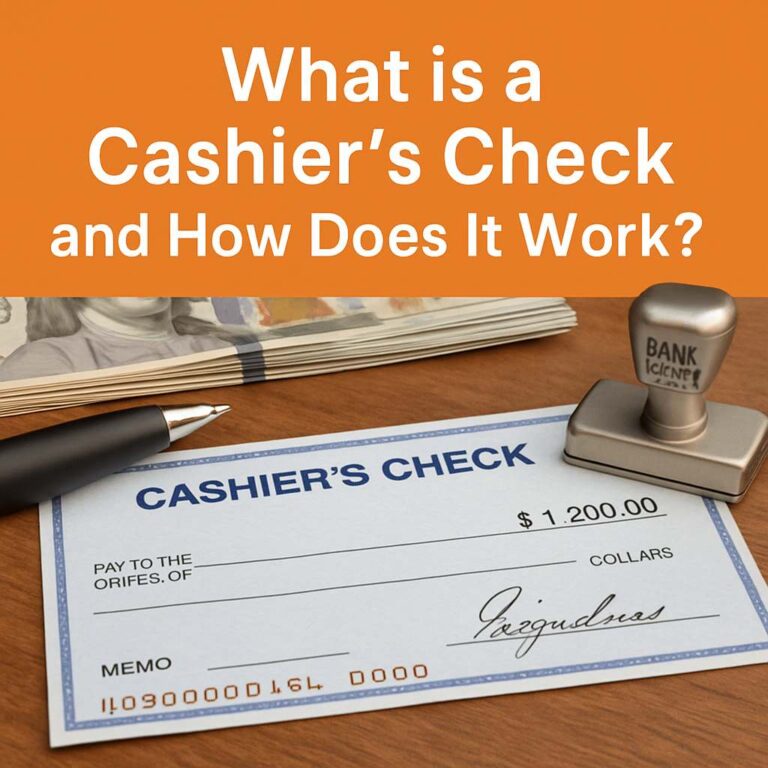
Here’s a cashier’s check example to make things simpler: a check made out to “John Smith,” amount $3000, with “Car Payment” in the memo. Filling them carefully means the recipient can deposit them without any hassle.
How Long Does a Cashier’s Check Take to Clear?
Frankly speaking, the exact timing varies, depending on several factors. However, the typical cashier’s check clearing time is within 1-2 business days.
Some banks might make funds available instantly or the same day, while others might take a bit longer, based on the whole verification procedure.
Below is a list of some factors that may affect how long cashier’s check takes:
- Different banks have different processing times.
- Some recipients’ accounts have faster availability for guaranteed funds compared to others.
- The bank processing is slower during the non-business days (weekends or holidays).
Cashier’s Check vs Money Order
Whenever it comes down to securing payments, one naturally finds themselves confused between a cashier’s check vs a money order. After all, both are reliable, but they serve different purposes.
Now, let’s take a quick look at the comparison:
| Feature | Cashier’s Check | Money Order |
|---|---|---|
| Issuer | Bank | Retailer/Post Office |
| Amount Limit | Usually no limit | Typically up to $1,000 |
| Security | Very high | Moderate |
| Cost | $5–$15 | $1–$5 |
| Use Case | Large payments | Small or medium payments |
So, when to choose which one:
Cashier’s check: Ideal for large payments like home purchases, car payments or other transactions where the recipient wants guaranteed funds.
Money Order: Great for smaller payments, such as, rent, utility bills or gifts. They are reasonable and convenient, but usually have a limit of around $1,000. Also, they don’t carry the same security level as a bank-issued one.
Therefore, between a money order and vs bank check, if you require guaranteed funds for a large transaction, opt for a cashier’s check. Whereas, for smaller, everyday payments, a money order is enough.
Cashier’s Check vs Certified Check
Sometimes, it can be quite confusing to know the actual difference between a cashier’s check and vs certified check, especially when both are considered safer than personal checks. Here’s a simple way to better understand it:
Cashier’s Check: The bank issues and guarantees the check using its own funds. You pay them, and they become responsible for the payment. Great for large payments, like house purchases, car sales, etc.
Certified Check: Through this check, it is meant to be drawn from your own account, whereas the bank certifies that the funds are readily available at issuance time. Hence, the recipient gets some assurance that the check won’t bounce, but the bank isn’t directly associated with guaranteeing the payment.
In short, a certified vs a cashier’s check comes down to who backs the money. That is, for maximum security, a cashier’s check is better, while for smaller, verified ones, a certified check is the ideal option.
How to Verify or Spot a Fake Cashier’s Check
Unfortunately, cashier’s check fraud is more common than most people can even realize; hence, it’s extremely crucial to know how to protect oneself.
This is how to verify a cashier’s check details and spot red flags quickly:
- Make sure the bank name, logo, and contact details look professional. You can also confirm things online as well.
- Use the phone number from the bank’s official website to confirm the check number, amount, and the sender. A good way to catch fake cashier’s checks signs.
- Real cashier’s checks have top-notch printing, watermarks, and security features. So, any sort of blurry text, uneven spacing, or missing security marks is are potential sign.
- In case someone sends you a cashier’s check for more than the amount and asks to refund the difference, it’s equivalent to cashier’s check fraud.
Can You Cancel a Cashier’s Check?
In short, yes!
But one thing to note down, it’s not as easy as canceling a personal check. As the bank guarantees the funds, they are quite difficult to reverse once issued.
If the check hasn’t been cashed or deposited yet, you might be able to request a stop payement on cashiers check, but the bank will need a declaration of loss and might make you wait up to 90 days before the refund. This waiting period prevents any kind of fraudulent or double payment.
However, if the cashier’s check has already been cashed, it’s too late to cancel, as the bank has already released it. Therefore, to avoid such situations, make sure to keep the card safe, double-check the information, and alert the bank once it’s lost/stolen.
Are Cashier’s Checks Safe?
Of course. In fact, they are one of the most secure payment methods available. And, when it comes to cashier’s check security, banks use various features like watermarks, special paper, and high-quality printing to make counterfeiting difficult. No wonder they are used for large payments!
But as always, no payment method is 100% foolproof. Scammers are always on the hunt to make fake versions, so it’s still essential to verify any check you receive, no matter the person.
Final Thoughts
Cashier’s checks are one of the most trusted ways to make large payments. From offering extra security to peace of mind, the list goes on!
Hence, make sure to use them wisely, stay alert for any kind of potential scams, to have a smooth and secure payment experience every time you use them.
Once issued, it can be hard to cancel. However, if lost or stolen, the bank might need a waiting period before replacing it. But there might be a small fee to purchase one.
A cashier’s check offers a safe and guaranteed form of payment for large transactions where the recipient needs to know the funds are real.
Mostly, yes. But some places might still verify them due to the possibility of fraud.
You can request one from your bank or credit union. Some might allow to order them online and have them directly mailed to you/the recipient.
You can directly cash or deposit them at the bank, credit union, or in some cases a check-cashing service.